Showing posts with label public anthropology. Show all posts

July 10, 2012

Speaking of open access...


The subject of open access publishing gets a fair amount of press around here at Savage Minds. For good reason, in my opinion, because the publishing regime that we currently have needs a little…rethinking.  Going “open access” is, of course, one possible option.  But what is this open access thing really all about?  If we’re going to consider OA, it’s probably a good idea to look deeper into the issues involved.  It’s definitely not some magical thing that will just happen overnight.  It will take work, planning, and cooperation among lots of people.  Anyway, here are some sources to look  into regarding anthropology and open access:*

First, check out Peter Suber’s overview of OA for starters.  Learn it.  Live it.  Know it.

Next, Wikipedia (fittingly) has a pretty nice overview of what OA is all about, including some of the debates about financing, etc.  The OA page is here.

Also, check out the three interviews I did with Jason Baird Jackson about Open Access and anthropology a while back.  Jason is a wealth of information when it comes to all things OA (have a look at his site too).  The first of the OA interviews with Jason is here.

Financing is one issue that comes up a lot, and rightfully so.  For a few ideas, have a look at Kim and Mike Fortun’s “thought experiment” about Liberating Cultural Anthropology.

More good stuff: the OA archives link here at Savage Minds.  You don’t have to go far to start reading about OA.

Finally, I’m adding this simply because I can’t help myself:


*If you have other OA sources and links, please feel free to post them in the comments section.

January 31, 2012

Ed Carr on Publishing, peer review, and how "only the senior faculty can save us"

Who can save us...from ourselves?  Who can put an end to the current fiasco that is academic publishing?  Since we are all so entrenched in this system, where can we look for a way out?  In a post about some of the issues that academia faces when it comes to the current politics of publishing and peer review, geographer Ed Carr over at Open the Echo Chamber makes the case that escape and salvation from may lie in the hands of senior faculty.  Is he right?  He might be.

Carr starts off the post by expressing his concern that academia is using practices like peer review as a way to segregate itself from wider audiences.  He argues that peer review is, at heart, not a bad thing, since it provides a way of vetting ideas in an important way.  But, he writes:
the practice of peer review in contemporary academia has turned really problematic. Most respected journals are more expensive than ever, making access to them the near-sole province of academics with access to libraries willing to purchase such journals. The pressure to publish increases all the time, both in rising demands on individual researchers (my requirements for tenure were much tougher than most requirements from a generation before) and in terms of an ever-expanding academic community.
One of the deeper issues, Carr argues, is that peer review can be riddled with politics that end up "slowing the flow of innovative ideas into academia" because those ideas may "run contrary to previously-accepted ideas upon which many reviewers might have done their work."  Ultimately, Carr writes, these issues with peer review certainly don't do much to help with the public image of academia (although he is speaking more specifically to geographers here, this applies to academics in general).

Here's Carr's solution, or, at least, his ideas for a way to start digging out of this trench:
So, a modest proposal: senior colleagues of mine in Geography – yes, those of you who are full professors at the top of the profession, who have nothing to lose from a change in the status quo at this point – who will get together and identify a couple of open-access, very low-cost journals and more or less pronounce them valid (probably in part by blessing them with a few of your own papers to start). Don’t pick the ones that want to charge $1500 in publishing fees – those are absurd. But pick something different . . .
Again, although he is speaking directly to other geographers here, I think this proposal applies to and should resonate with the anthropological crowd as well.  For Carr, such a move would be a critical step for opening up academic publishing to wider possibilities, conversations, and collaborations.  I agree,nd I think he is right that certain established faculty members are in an important position for inciting and promoting change.  It's a matter of interest and desire.

At the same time, coming from the position of a graduate student, I can't help but wonder how those of us on, well, lower rungs of the academic ladder can do to actively foster these kinds of changes.  Since we are all encouraged to publish publish publish, maybe it would be a good idea to start thinking more strategically about how and why we are publishing, and more importantly WHO we decide to publish with.  If every graduate student and new professor is constantly upholding the current regime by basically giving up the fruits of their labor (and effectively providing certain publishers with a never-ending stream of valuable products), why WOULD anything change?  So, in the end, I think that Carr is definitely right, but that many of these changes are going to have to start taking place on multiple fronts as well.
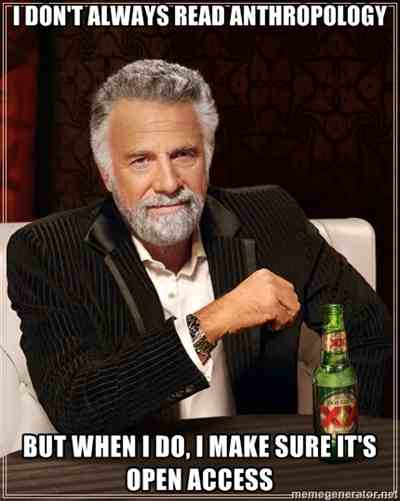
On that note, check this out.

November 19, 2011

UC Davis: Dissent and pepper spray

The police show the world how NOT to handle dissent and protests at UC Davis.  From the Huffington Post:
On Friday, a group of University of California, Davis students, part of the Occupy Wall Street movement on campus, became the latest victims of alleged police brutality to be captured on video. The videos show the students seated on the ground as a UC Davis police officer brandishes a red canister of pepper spray, showing it off for the crowd before dousing the seated students in a heavy, thick mist.
 And here's more from CNN:
The chancellor of the University of California, Davis, under calls to resign, Saturday called police use of pepper spray on seated Occupy protesters "chilling" and established a task force to look into the incident.

The video broadcast by CNN Sacramento affiliate KOVR showed an officer, in a sweeping motion, spraying protesters point blank on Friday before other officers moved in. Eleven people were treated on site for effects of the yellow spray. Two of them were sent to the hospital, university officials said.
Here's one of the videos of this incident:


Assistant professor of English Nathan Brown wrote an open letter to the UC Davis Chancellor.  Here's a selection:
I am a junior faculty member at UC Davis. I am an Assistant Professor in the Department of English, and I teach in the Program in Critical Theory and in Science & Technology Studies. I have a strong record of research, teaching, and service. I am currently a Board Member of the Davis Faculty Association. I have also taken an active role in supporting the student movement to defend public education on our campus and throughout the UC system. In a word: I am the sort of young faculty member, like many of my colleagues, this campus needs. I am an asset to the University of California at Davis.
Read the rest.  Here's my question: Now what?  I find it pretty shocking and disturbing that the police reacted to this protest in this way.  Yes, I can understand the fact that the police had a job to do, and I can understand the fact that UC Davis felt it needed to "do something" about the protests.  Fine.  But this?  Since when is it necessary to resort to these kinds of actions when dealing with non-violent protesters?  Why are these student encampments so threatening that they necessitate pepper spray and violence?  What were these police thinking?  What do they really think they accomplished with this?  Do we really want to sit back and watch as the government (and university officials) respond to dissent and protests like this?  At what point is enough enough?

November 7, 2011

Quote of the week: John Hawks

From John Hawks' latest post about publishing and open access:

"Seems to me that integrating online discussion into the academic literature would be done most simply by exploiting the system most widely used for citation tracking in the literature itself -- and that many blogs (including mine) already track. However, adding DOI to content turns out to involve an expensive membership to a cartel run by publishers."

 Read the rest, here.

October 26, 2011

Anthropology & Intellectual Reconstruction

Over at the "Democracy in America" blog at The Economist, M.S. has a new post that replies to Florida Governor Rick Scott's recent "we don't need no anthropologists" statement.  The author provides a rehash of the whole debacle, and then quotes Arizona State University president Michael Crow's response to the situation:
[R]esolving the complex challenges that confront our nation and the world requires more than expertise in science and technology. We must also educate individuals capable of meaningful civic participation, creative expression, and communicating insights across borders. The potential for graduates in any field to achieve professional success and to contribute significantly to our economy depends on an education that entails more than calculus.
Curricula expressly tailored in response to the demands of the workforce must be balanced with opportunities for students to develop their capacity for critical thinking, analytical reasoning, creativity, and leadership—all of which we learn from the full spectrum of disciplines associated with a liberal arts education. Taken together with the rigorous training provided in the STEM fields, the opportunities for exploration and learning that Gov. Scott is intent on marginalizing are those that have defined our national approach to higher education.
M.S. argues that Crow's statement is "a solid response," but that something more is needed: "What it lacks are rhetorical oomph and concrete examples."  So what can provide that extra OOMPH and rhetorical power?  Actual examples of anthropologists putting their training and knowledge to work:
Some of the best analysis of the 2007-2008 financial crisis, and of the ongoing follies on Wall Street these days, has been produced by the Financial Times' Gillian Tett. Ms Tett began warning that collateralised debt obligations and credit-default swaps were likely to lead to a major financial implosion in 2005 or so. The people who devise such complex derivatives are generally trained in physics or math. Ms Tett has a PhD in anthropology.
Read the rest on Savage Minds, here.

September 7, 2011

Matt Thompson: "Let public anthropology be fast, cheap, and out of control."

Matt Thompson just wrote a fantastic post over at SM.  Here's the end of it:
What I’m trying to say is don’t sit around waiting for the next Margaret Mead. And anthropology doesn’t become more relevant to Jose Six-pack once we cross Marshall Sahlins with Marshall Mathers. We can all be public intellectuals of a local, non-celebrity sort. Find something where you are, some way to play a role however small and do it. It doesn’t have to be hard. You don’t have to write a grant. Just share what you know and what you do with the people around you. Let public anthropology be fast, cheap, and out of control.
 Now, go read the beginning and middle, here.

August 24, 2011

the search for anthropology in public, part II

Whenever I go into a bookstore, I always check out the anthropology section (see part I here).  A curious habit, or custom, or something like that.  What can I say?  I have my routines.  I like to see what happens to be on the shelves and compare that to my own understandings of what contemporary anthropology is all about.  I imagine that this is some sort of litmus test that tells us something about the state of anthropology in the public sphere.  Maybe, maybe not.  More about that shortly.  So, the last time I did this informal empirical investigation, the results were similar to past experiences: not phenomenal.  The most "anthropological" books included:

1. Composing a Life by Mary Catherine Bateson
2. The Third Chimpanzee by Jared Diamond
3. 1491 by Charles Mann
4. Food of the Gods by Terence McKenna

Bateson's was the only book I saw that was written by an actual anthropologist.  How it is that only one anthropologist happens to be in the anthropology section is beyond me.  This was a particularly skewed sample, I'll admit--usually there's at least a Wade Davis, Margaret Mead, or even Sir James Frazier in the mix.  Not this time.  The rest of the section was incredibly eclectic, and included everything from books by Drew Pinsky to one by Maira Kalman (which does look pretty cool, though not what I would define as anthropology).  Some of this eclectic-ness had to be due to some restocking malfunctions, undoubtedly, but overall the section on anthropology was, as is often the case, a strange and somewhat askew reflection of the discipline.  Yes, that is an opinion.  And now, it's time for some questions...

Read the rest on Savage Minds, here.

July 13, 2011

Making the (Funding) Cut: The NSF, Anthropology, and the value of social science

Social science research isn't on the firmest ground in these days of economic malaise, but it's not like this news is exactly exploding into the headlines across the nation.  Funding cuts, like the recent "trimming" of the Fulbright program,* seem to take place somewhat under the radar.   The same can be said of the recent debates about the value of social, behavioral, and economic (SBE) sciences that took place about a month ago in a congressional hearing on June 2, 2011 (this link has PDFs of the introductory statements and the testimony of all the witnesses).  The social sciences face an uphill battle, in part, because some folks see them as mere "soft sciences" that do not merit public support.  The House panel subcommittee meeting was about assessing the relative merit of the social sciences and how federal funding should or should not be allocated to researchers.  Did you hear about this?  Well, I didn't--at least not until just a few days ago.  Funny what can happen in the middle of the summer, isn't it?  Anyway, here's a recap of what went down according to a summary from the Consortium of Social Science Associations (COSSA):

Rep. Mo Brooks (R-AL) chaired the panel, which included the testimony of four witnesses:  Myron Gutman (Assistant Director for NSF's SBE directorate), Hillary Anger Elfenbein (Olin School of Business at Washington University, St. Louis), Peter Wood (President of the National Association of Scholars), and finally Diana Furchtgott-Roth (Senior fellow at the Hudson Institute).  Here's how Brooks described the basic purpose of the hearing:
The goal of this hearing is not to question whether the social, behavioral, and economic sciences produce interesting and sound research, as I believe we all can agree that they do. I come from a social science background. I have a degree in political science and economics. Rather, the goal of our hearing is to look at the need for federal investments in these disciplines, how we determine what those needs are in the context of national priorities, and how we prioritize funding for those needs, not only within the social science disciplines, but also within all science disciplines, particularly when federal research dollars are scarce.
Brooks' language sounds cool, rational, and impartial.  However, according to journalist Jeffrey Mervis:
Brooks may have been pulling his punches. In comments to ScienceInsider after the hearing, Brooks expressed serious doubts about the value of the social sciences. The freshman legislator said he "understands the value of basic research" because his constituents in and around Huntsville, Alabama, make up "one of, if not the most, highly educated districts in the sciences." Brooks did say that "my priorities would be to protect basic research in the sciences as much as possible, even to the extent of cutting entitlements, in order to generate enough funding for basic research." But his definition of the term "basic research" turns out to be synonymous with the so-called hard sciences, and to exclude the social sciences.

February 12, 2011

Daniel Lende: "You can read this blog for free"

Daniel Lende over at Neuroanthropology has a new post about some of the possibilities for anthropology. He talks about some of the recent PR controversies that took place within the field, and how this is illustrative of some of the primary issues and challenges that anthropologists face these days. We are, it seems, at a bit of a crossroads. And it's probably about time to move away from some of the old models and explore new ways of not only doing anthropology, but also publishing and disseminating anthropology. My favorite part of the post is when Lende talks about the contrast between old school publishing models (which lock up information behind expensive subscriptions) and some of the new possibilities:
The Nature commentary by Adam Kuper and Jonathan Marks is behind a paywall. It costs $32 to buy, unless you have institutional access. Ulf Hannerz’s article in American Anthropologist, which Greg drew on extensively in writing about diversity as anthropology’s brand, is available either through institutional access or by joining the American Anthropological Association. The cheapest AAA membership costs $70. You can read this blog for free (my emphasis).
That last line is a beauty. The point, as I see it, isn't to do away with journals, but instead to realize that the publication models are severely limiting. If we are all about the dissemination of anthropological analysis, concepts, and ideas to wider audiences, how is that supposed to happen if all of the latest research sits behind a subscription wall? The irony of course is that there is still a fairly skeptical view among THE ACADEMY about online publishing. Many question whether or not REAL RESEARCH can be published online. I mean, is it possible? However, I have recently run a complex experiment and come to the conclusion that yes, all 26 letters of the English alphabet do show up on screen, so it is indeed possible to publish real, valuable, and important work online. The only thing stopping this is a lack of either interest or desire. So it goes. As Lende points out:
A negative view of writing online (i.e., blogging) and a closed view of knowledge production (i.e., through institutional access or society membership) is still predominant in anthropology.
It's funny, when you think about. Or, at least, when I think about it. Anthropologists are doing all sorts of cutting edge, timely, and fascinating research. So why is our publishing model and ideology so....well...stale? The good thing is that people like Lende, Greg Downey, the folks at the OAC (Open Anthropology Cooperative), Max Forte, the Savage Minds crew, John Hawks, John Postill, Colleen Morgan, and a slew of others are indeed messing with the boundaries. Who knows? Maybe, at some point, more people outside of the academic world will actually know what anthropologists are up to.

Here's another good section from Lende's post:
Online media, not just writing, is an incredible way to reach the public. Michael Wesch, a cultural anthropologist who became interested in new media and teaching after doing his doctoral work in Papua New Guinea, work with his students to create a video, A Vision of Students Today. It has been viewed 4,136,850 times. That is an incredible impact.

And open access? Take PLoS One. It was founded in 2006, and covers research in science and medicine. In five years, it became the world’s largest journal. That is incredible success. One of its more technical journals, PLoS Biology, was founded in 2003, the first of the PLoS journals. It has been the highest impact journal in biology, as ranked by the Institute for Scientific Information. Open access isn’t just viable – it is the way to reach the broadest possible audience and have the greatest scholarly impact.

On Amazon, which came to fame and financial success by selling books online, its #1 product is its Kindle e-reader. Books themselves are going digital. And not just books. Amazon recently launched Kindle Singles, which presents “a compelling idea–well researched, well argued, and well illustrated–expressed at its natural length.” Apple’s iPad offers ways to integrate multi-media features with traditional text. Digital innovation in how we present scholarly material is already happening, and will continue to grow extremely rapidly.

Anthropologists need to go digital – blogging, collaborating, creating, sharing, and disseminating the field online. Blogs, the integration of new media with text, e-publications, and open-access publishing need to be part of how we keep our borderlands discipline healthy and vibrant.

To do otherwise, is to make the field into a marginal borderland, rather than the key meeting place and vibrant area of production the anthropology is today and can be even more so in the future.

Agreed. No need to remain on the borderlands any longer. Time to go push the boundaries and go digital. What's stopping us?

UPDATE: Check out Michael E. Smith's response to this issue: "Anthropologists Urged to Unite Behind Archaic Policies and Technology."

January 17, 2011

Peaking over the walls of knowledge

More reactions and thoughts about this post over at the Open Anthropology Cooperative (OAC). I have asked similar questions in the past--why hasn't anyone ever heard of anthropology? Why do people always ask if we study dinosaurs? Or rocks? Or ants? What's with the terrible lack of public knowledge about anthropology? Is it because anthropologists' work is completely irrelevant? Is it because the general public just doesn't GET IT? Is it because there is a lack of interest in what anthropologists do?

None of the above.

Greg Downey over at Neuroanthropology PLoS brings up a good point in his most recent post. He talks about the most recent issue of American Anthropologist, which has a "Vital Topics Forum" that explores the always fascinating subject of human nature. A timely theme, if you ask me. The issue features prominent anthropologists parsing their way through a notoriously difficult question. But, of course, 99.9% of the general public will have no clue about any of this. Why? As Downey explains:
Unfortunately, given the illiberal policies on publication access practiced by the American Anthropological Association, the forum is behind a subscription wall, so you cannot access it without going through an academic library (unless you’re an AAA member). I’m still grousing about the complete absence of open-access journals in our field, as I think any discussion of ‘public outreach’ given the way we’ve locked up our publications is a bit hypocritical.
Greg is definitely right. And I like his idea about creating an open access online journal. Why not? Anthropologist work on all kinds of pretty interesting subjects...but the vast majority of their work ends up in either subscription-based journals or monographs that aren't exactly geared toward larger audiences (they are usually written for students and other academics, for the most part. There are, of course, exceptions). I definitely do not think that anyone needs to do away with journals and specialized anthro books--but a push toward different forms of media wouldn't be a bad idea.

February 1, 2010

Get the message to the people, or something like that

Should anthropologists write for a more general audience? Why or why not? Why is this such a debate? For some reason, it is. I think that it makes sense to find ways to speak to different audiences, considering the fact that anthropology is supposedly about humanity or some such thing. So why not spread the message? Why not get into some debates? Why not try to put anthropology out there? Why not publish in various formats? Don't anthropologists have something interesting to say?

Unless, of course, the purpose of anthropology is actually to produce PhD dissertations, journal articles, and monographs for university bookshelves and undergraduate reading lists. Maybe that's the problem. Is that the final goal? Is that the most important goal? Should there be other goals?

Here's the thing though. Nobody--or very few people--are going to read books that are ABOUT the discipline of anthropology itself. And it seems to me that many of the general audience books are more about anthropology and its UNIQUE perspective and less about an actual subject, event, or issue. The kinds of publications should, in my view, be more about the subjects and less about pushing an anthropological perspective per se.

As an analogy, this is like the difference between publishing a book that is ABOUT photography versus publishing a book that is a photographic essay. Huge difference. One will appeal mostly to photographers, and the other might have the possibility to appeal to a much different audience, depending on what it's about.

To quote Henri Cartier-Bresson:

"Photography is nothing - it's life that interests me."

So what does that mean for anthropology? Maybe it means that we need less books about anthropology and more books by anthropologists about the ideas, subjects, events, issues, debates, stories, and experiences they know best.

That's my thought of the day.